Maps and mazes
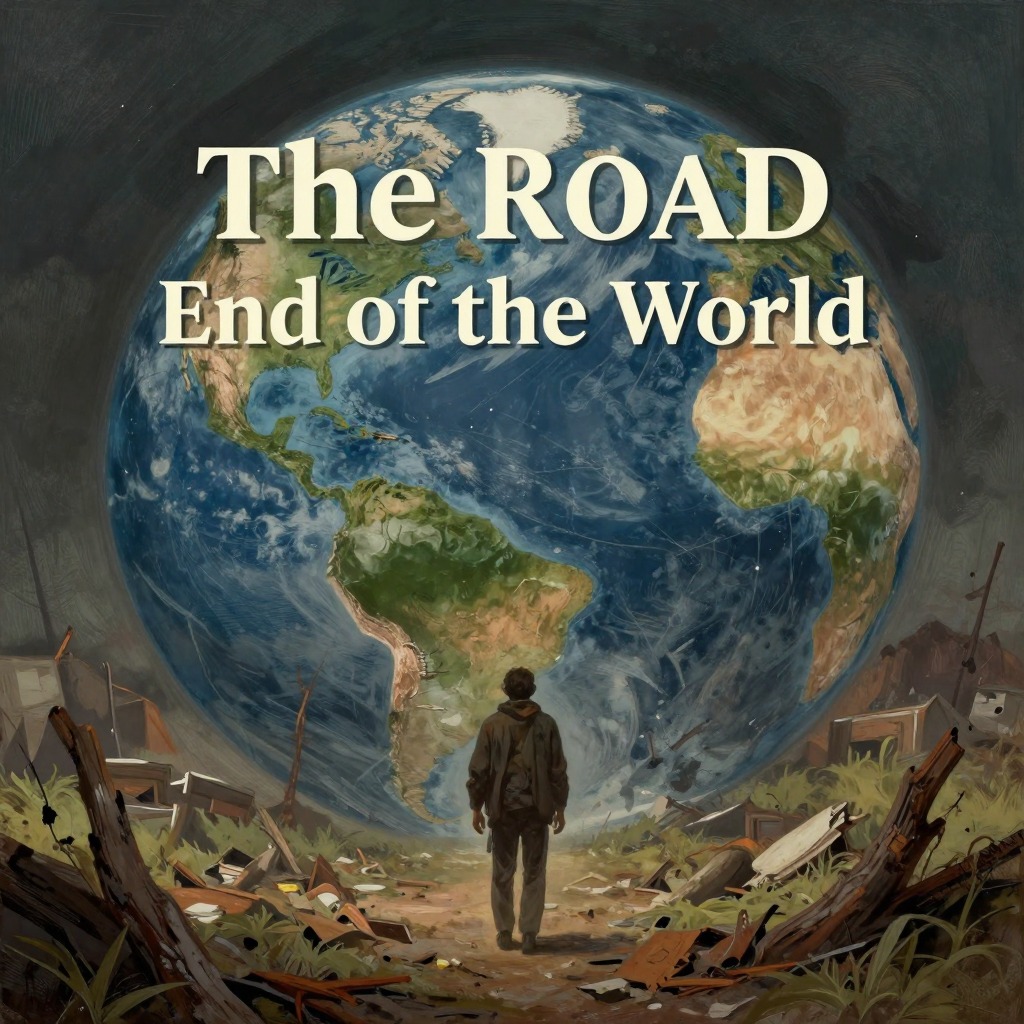
Maps and mazes is the culminating image of Cormac McCarthy's The Road, appearing in the novel's final paragraph as part of a description of brook trout that once lived in mountain streams. The phrase condenses the book's deepest preoccupations: the lost coherence of the natural world, the irreversibility of destruction, and the haunting beauty of what has vanished forever.
The Final Passage and Its Context
The novel closes not with the boy's survival or his adoption by the good family, but with a lyrical, retrospective passage that stands apart from the narrative's grim chronology. The brook trout are described as they once were: visible "standing in the amber current where the white edges of their fins wimpled softly in the flow," smelling "of moss in your hand," their bodies "polished and muscular and torsional." On their backs were "vermiculate patterns" — worm-like, intricate markings — that the narrator identifies as "maps of the world in its becoming. Maps and mazes." The passage then pivots to loss: "Of a thing which could not be put back. Not be made right again." The final sentence returns to the deep glens where the trout lived, places where "all things were older than man and they hummed of mystery."
The Image as Structural Conclusion
This closing image functions as the novel's true ending, not the boy's integration into the new family. The "maps and mazes" on the trout's backs represent a world that was coherent, patterned, and meaningful — a world that could be read and navigated, full of the mystery of origins. The "becoming" of that world is now finished, and the maps are useless. The phrase "maps and mazes" yokes together two opposing ideas: a map implies order, orientation, and the possibility of finding one's way; a maze implies confusion, entrapment, and dead ends. The world of the novel has become a maze without a map, and the patterns on the trout are a memory of a time when the two were the same thing.
Connection to the Novel's Central Concerns
The motif echoes the man's earlier attempts to orient himself and the boy in a world stripped of landmarks. The man carries a tattered oilcompany roadmap, now "sorted into leaves and numbered with crayon in the corners for their assembly" , and he and the boy pore over it, trying to locate themselves in a landscape that no longer corresponds to any known geography. The map is a relic of the lost world, as useless as the "maps and mazes" on the trout. The boy asks about the states that used to exist, and the man tells him they are gone (E00093-E00094). The sacred idiom is "shorn of its referents and so of its reality" . The maps and mazes of the trout are the last referent — the last pattern that once meant something — before the world became unreadable.
The Irreversibility of Loss
The passage insists that what has been destroyed cannot be restored: "a thing which could not be put back. Not be made right again." This is the novel's final verdict on the apocalypse. Unlike the boy's hope that goodness will find the little boy , or the man's insistence that they are "carrying the fire" , the closing image offers no consolation. The trout are gone, the streams are dead, and the maps and mazes on their backs are a record of a world that no longer exists. The final word — "mystery" — is not a promise of transcendence but an acknowledgment of what has been lost beyond recovery. The novel ends not with the boy's future but with the memory of a past that can never return, a pattern that can never be traced again.